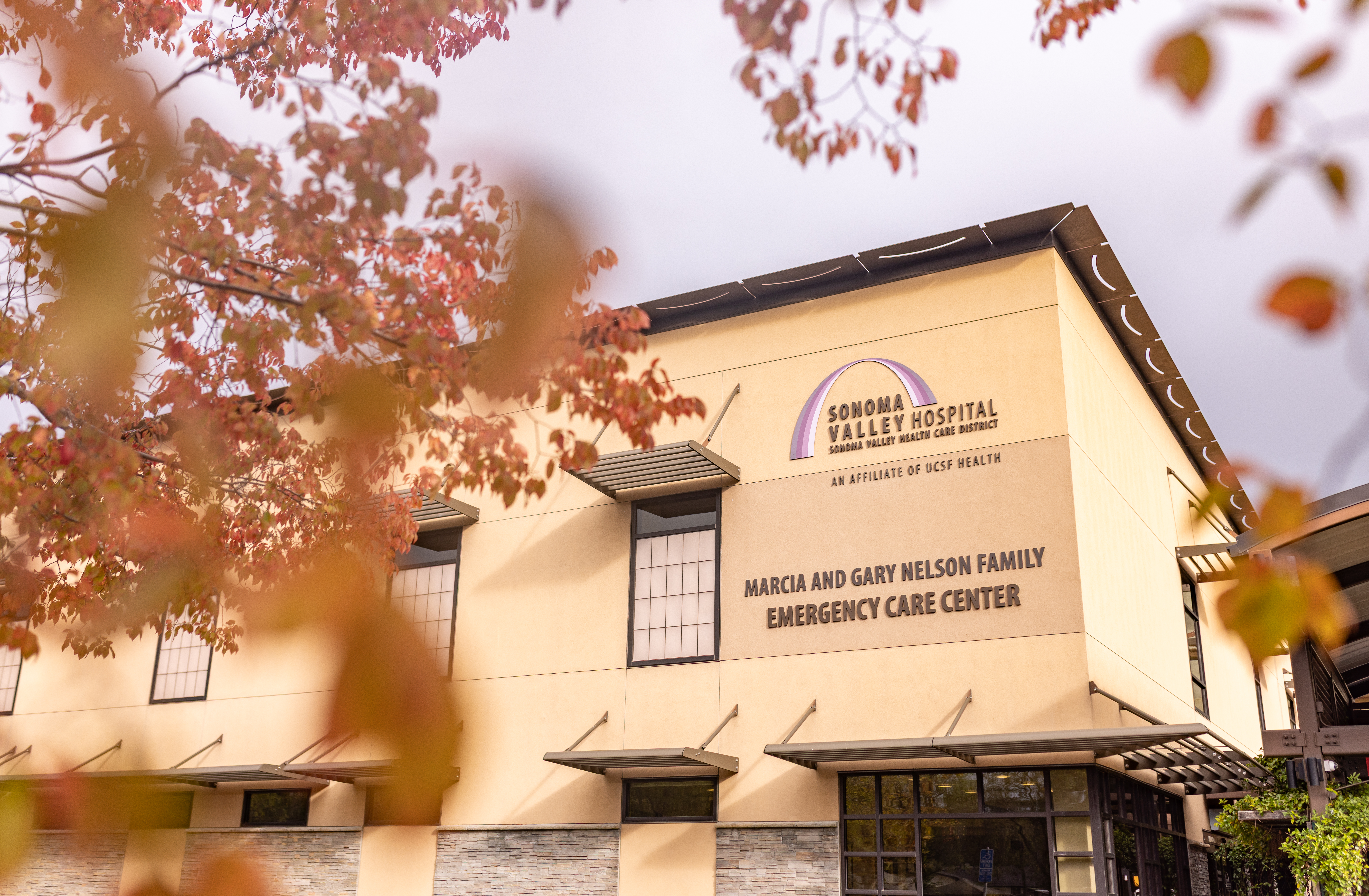
Sonoma Valley Hospital – Sonoma, CA
Case Study
Healthcare
Power Resilience and Cost-Predictable Energy for Critical Healthcare Operations in California
When wildfires, Public Safety Power Shutoffs (PSPS), or grid outages threaten hospital operations, Sonoma Valley Hospital in Northern California remains powered and ready to deliver uninterrupted patient care. Unison Energy’s combined heat and power (CHP) microgrid provides resilient onsite electricity and thermal energy, allowing the hospital to continue operating independently of the utility grid during emergencies. Specifically designed for Northern California’s wildfire-prone environment, the microgrid strengthens energy resilience while supporting critical healthcare operations.
Client Goals: Maintain continuous hospital operations during wildfires, Public Safety Power Shutoffs, and other grid disruptions while improving energy efficiency and avoiding upfront capital investment.
- CHP-based microgrid supplies over 90% of the hospital’s annual electricity needs
- System produces more than 70% of the hospital’s hot water demand
- Total system efficiency of 60.5% (HHV)
- Island-mode capability enables operation independent of the utility grid during outages
- Installed to seismic standards established by the California Department of Health Care Access and Information (HCAI)
- Meets Bay Area Air Quality Management District air permit requirements, among the most stringent in the country
- Structured under an Energy-as-a-Service model with no upfront capital investment
- Unison Energy owns, operates, and maintains the system over its life, allowing hospital staff to remain focused on patient care
- Designed for future fuel flexibility, including renewable natural gas and hydrogen as those options become more viable
Powering Critical Hospital Operations During Grid Outages
Project Details:
Sonoma Valley Hospital serves a Northern California community that has faced repeated disruptions from wildfires and Public Safety Power Shutoffs, where utilities routinely de-energize the grid during high wind events to reduce wildfire risk. For a hospital, these outages pose a direct threat to patient safety and continuity of care. Prior to the project, limited backup generation required staff to prepare for – and in some cases execute – patient evacuations during wildfire-related outages, interrupting essential services and creating significant operational and financial strain.
To safeguard its operations and community, Sonoma Valley Hospital partnered with Unison Energy to develop an onsite cogeneration microgrid under a long-term Energy Services Agreement. Unison designed, built, owns, and operates the system, delivering a turnkey solution that ensures continuous power and heat even when the utility grid is shut down. The system is capable of islanding from PG&E and supplementing the hospital’s emergency generators, extending backup coverage to equipment not previously connected and providing an additional layer of resilience during PSPS events, wildfires, and other natural disasters.
Engineered to sustain hospital operations during both planned and unplanned outages, the microgrid supplies more than 90% of the hospital’s annual electricity needs while producing over 70% of its hot water demand. By capturing and reusing thermal energy to generate steam for the hospital boiler system, the CHP system significantly improves overall energy efficiency while reducing reliance on conventional boilers.
The project required a highly customized design due to space constraints on the hospital campus. The system was installed within the hospital itself, with supporting equipment strategically placed on the roof, and engineered to meet the seismic standards set by the California Department of Health Care Access and Information. The system underwent third-party seismic shake testing prior to installation to ensure performance in earthquake-prone conditions. Despite these complexities, Unison delivered a fully integrated system without disrupting day-to-day hospital operations.
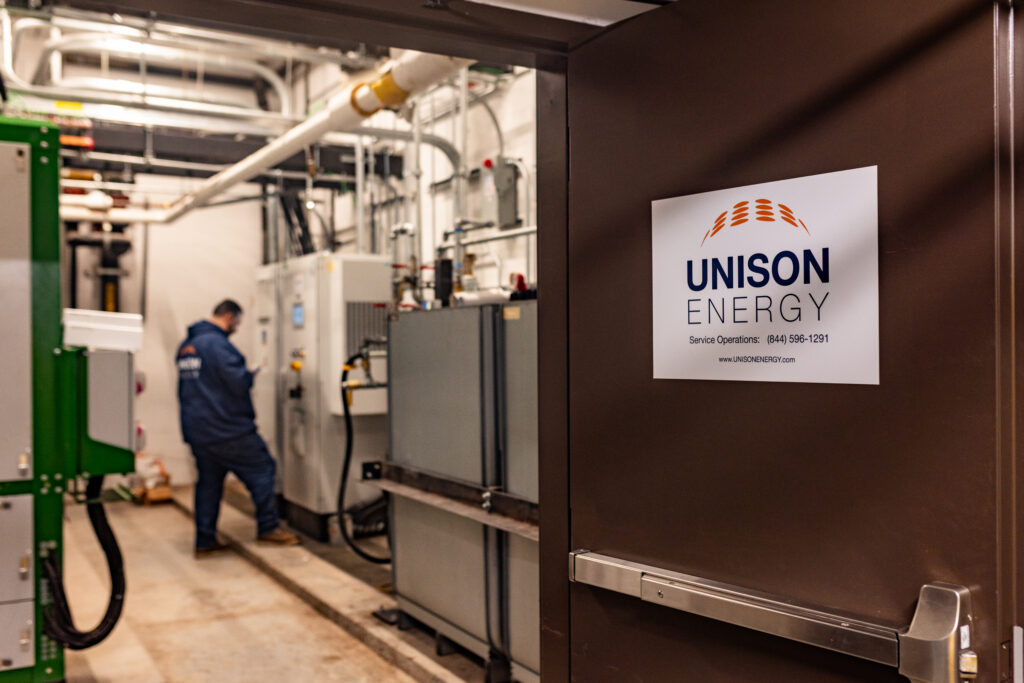
The hospital microgrid meets the Bay Area Air Quality Management District’s stringent air permit requirements and is designed for long-term flexibility, including the ability to transition to alternative fuels such as renewable natural gas and hydrogen. The system can also be expanded to support future needs, including EV charging infrastructure, facility expansion, and additional energy-intensive medical equipment.
Through the Energy-as-a-Service model, Sonoma Valley Hospital implemented advanced energy infrastructure without upfront capital investment, while Unison Energy manages all operations and maintenance. This structure allows hospital leadership to remain focused on patient care while stabilizing energy costs, reducing exposure to utility price volatility, and avoiding the operational risks associated with outages.
Today, Sonoma Valley Hospital is better positioned to maintain critical operations during wildfires and grid disruptions, providing continuous power, heat, and essential services when they are needed most.
“When people in our community need us most, our hospital is there. People should be able to count on their local hospital to be safe, open, and ready to provide care. This project will help us deliver that care when it matters most.” Kelley Kaiser, President and CEO, Sonoma Valley Hospital
Smarter Energy for Better Care
Healthcare organizations can’t afford gaps in power or capital. Let’s evaluate how on-site generation can strengthen your resilience, reduce energy costs, and free up budget for patient care.
Share on
About us
Engineered for Performance. Built for the Long Term.
Unison Energy combines capital strength, technical expertise, and operational discipline to deliver resilient power for facilities across industries.

Related posts
Insights shaped by over a decade of experience
Explore more perspectives on energy costs, resilience, and on-site generation from the Unison Energy team.
View All Blogs