PJM Wholesale Electricity Prices Are Up 50%. What It Means for Commercial and Industrial Energy Users
Blog
Energy Cost savings
New market data points to a broader trend of rising electricity costs and increasing price volatility. Here’s what commercial and industrial organizations should be paying attention to.
Wholesale electricity prices don’t usually jump 50% in in a year.
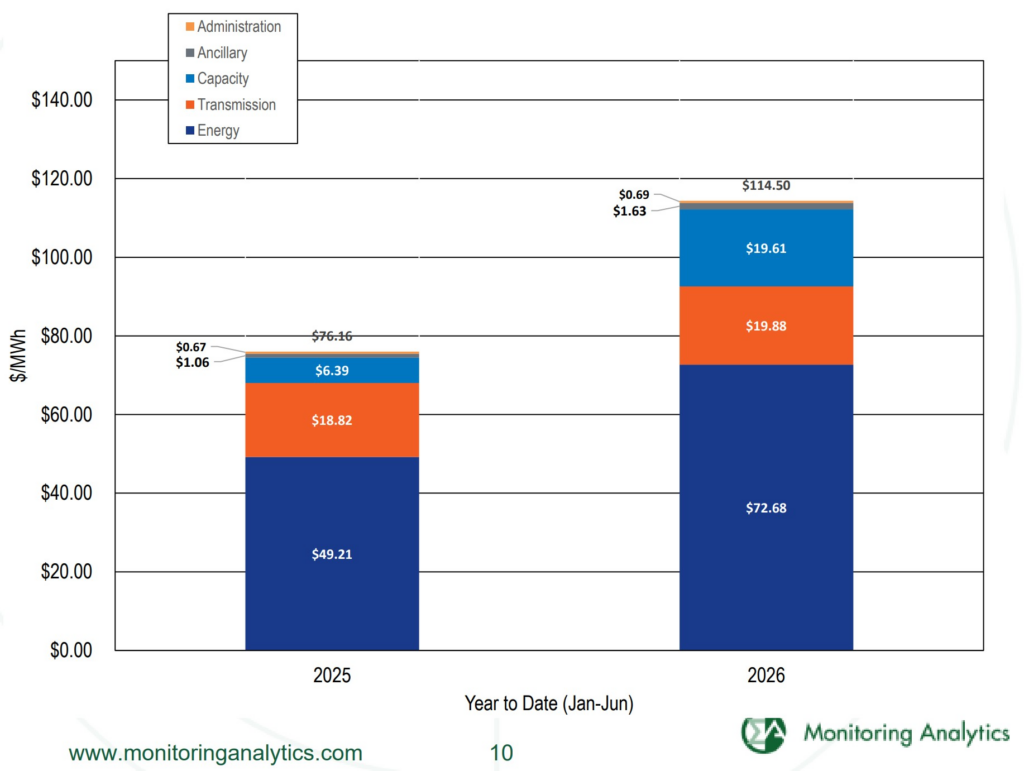
That’s exactly what the latest analysis from Monitoring Analytics1, PJM’s independent market monitor, shows. PJM operates the nation’s largest wholesale electricity market and electric grid across 13 states and the District of Columbia, making its market trends important for millions of commercial and industrial (C&I) energy users. Average wholesale electricity costs reached $114.50/MWh during the first half of 2026, up 50.3% from the same period last year.
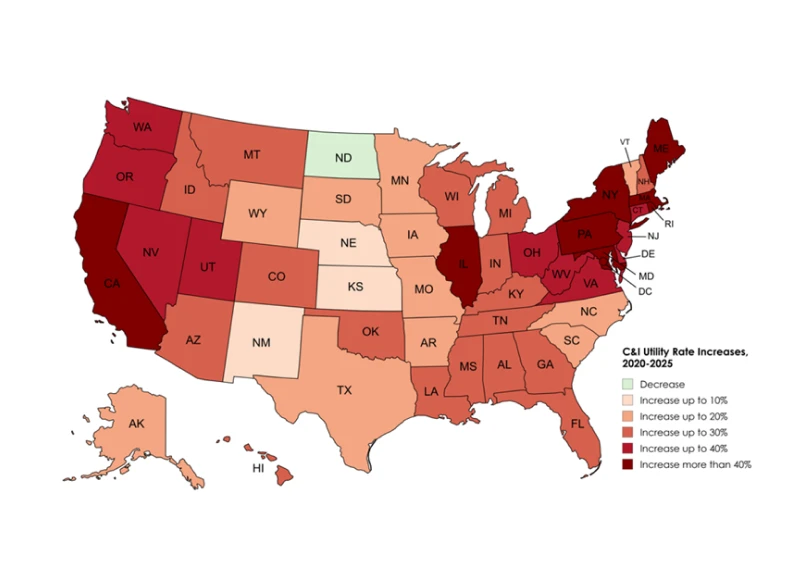
The latest market data is about more than a sharp increase in wholesale electricity prices. When viewed alongside recent PJM capacity auction results, continued transmission investment, and growing electricity demand, it points to a broader trend that commercial and industrial organizations should be watching.2
Why PJM Wholesale Electricity Prices Are Rising
Wholesale electricity prices always fluctuate. What’s different today is that several long-term trends are pushing in the same direction.
Capacity costs continue to climb. Capacity costs were up 207% compared to the first half of 2025. Looking ahead, PJM’s capacity market remains elevated, with total capacity costs increasing from roughly $14.7 billion for the 2025/26 delivery year to approximately $16.4 billion for 2028/29.
Energy market prices remain under pressure. Winter Storm Fern drove significant price increases earlier this year, but it’s only part of the story. PJM is also operating with tighter supply-demand conditions, leaving less cushion during periods of peak demand.
Transmission investment continues to grow. Utilities continue investing in aging infrastructure and grid modernization. Those investments are necessary, but they also contribute to higher delivered electricity costs over time.
None of these trends alone explains a 50% increase in wholesale electricity prices. Together, they point to a market where higher electricity costs and greater price volatility may become more common.
What This Means for Commercial and Industrial Organizations
Wholesale electricity prices are only one component of a facility’s electric bill. But when wholesale costs remain elevated, they eventually put upward pressure on overall electricity costs.
For many organizations, that raises important questions:
- How exposed are we to electricity price volatility?
- How can we improve energy reliability while managing long-term energy costs?
- How can we gain more control over our long-term energy strategy?
These are conversations we’re having more often as electricity demand grows and grid infrastructure continues to evolve.
Reducing Exposure to Rising Electricity Costs
No organization can control where wholesale electricity prices go next. But they can evaluate how much they’re exposed to those market swings.
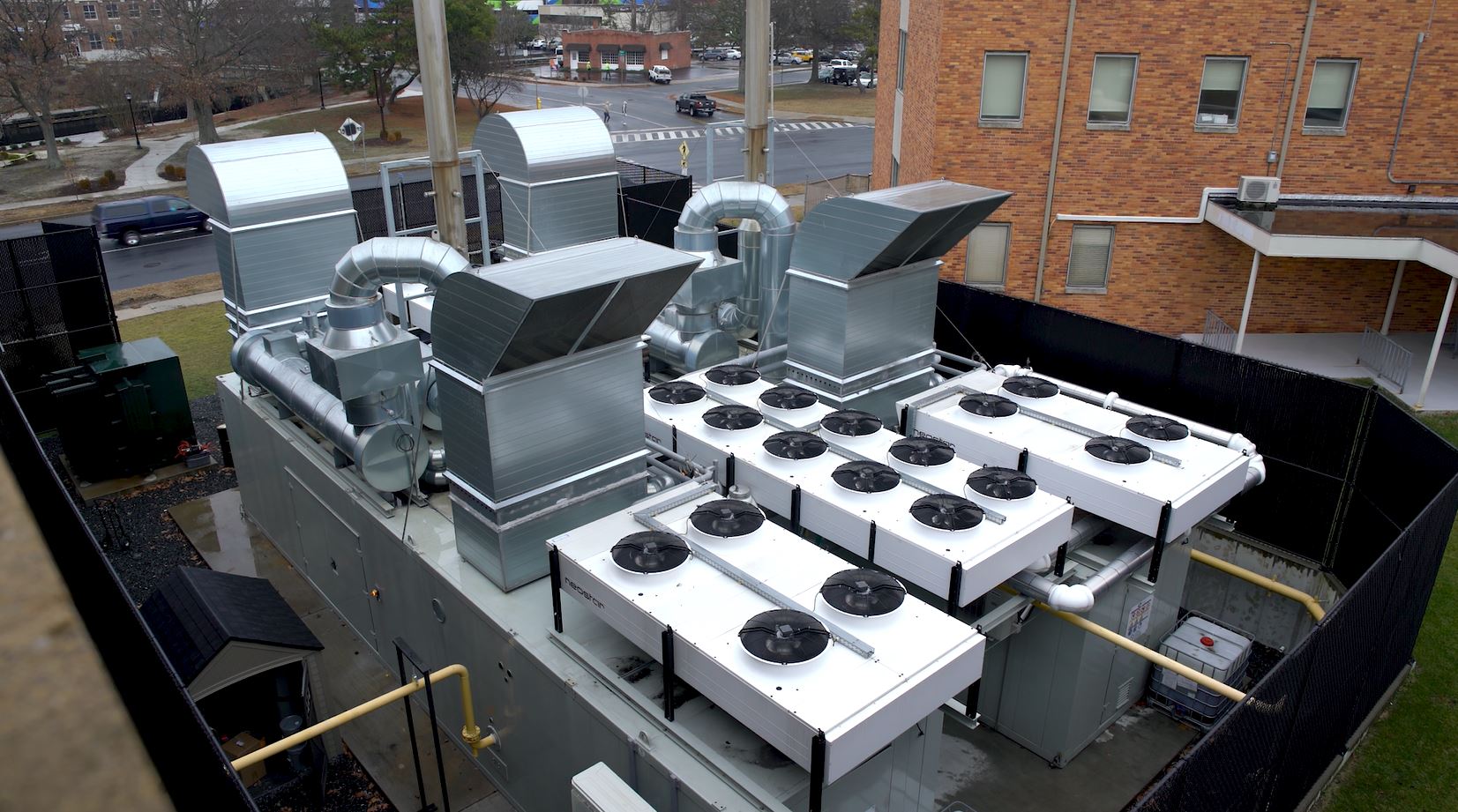
As electricity costs become more volatile, many commercial and industrial organizations are rethinking their long-term energy strategy. Rather than relying exclusively on the utility grid, facilities with significant electric and thermal loads are increasingly investing in onsite Combined Heat and Power (CHP) microgrids to improve reliability while reducing long-term energy costs.
Unlike standby generators that operate only during outages, CHP systems generate electricity every day while recovering thermal energy that would otherwise be wasted. That energy can be used to produce steam, hot water, or chilled water, reducing electricity purchases while improving overall energy efficiency.
Through Unison Energy’s Energy-as-a-Service (EaaS) model, organizations can deploy these systems without upfront capital investment. Unison designs, finances, owns, operates, and maintains the microgrid, allowing customers to improve energy resilience, stabilize long-term energy costs, and reduce exposure to increasingly volatile electricity markets.
Preparing for Rising Electricity Costs
These trends across the PJM market suggest the forces driving electricity costs higher are unlikely to disappear anytime soon.
No one can predict exactly where wholesale electricity prices will go next. But organizations can better understand their exposure and begin evaluating strategies that improve energy reliability, reduce long-term costs, and lessen dependence on increasingly volatile electricity markets.
If your organization is evaluating whether an onsite CHP microgrid is the right fit for your facility, Unison Energy can help. Our team will assess your energy profile and determine whether an Energy-as-a-Service (EaaS) solution can support your long-term energy strategy. Contact us for a free no-obligation energy assessment.
2 Utility Dive. “PJM Capacity Auction Prices Hit the Cap Amid Growing Reserve Shortfall.”

ByPeter Cavan
Head of Strategy
Share on
Share on
About us
Engineered for Performance. Built for the Long Term.
Unison Energy combines capital strength, technical expertise, and operational discipline to deliver resilient power for facilities across industries.

Related posts
Insights shaped by over a decade of experience
Explore more perspectives on energy costs, resilience, and on-site generation from the Unison Energy team.
View All Blogs