Power Under Pressure: Grid Risk, Extreme Weather, and the Case for Onsite Power
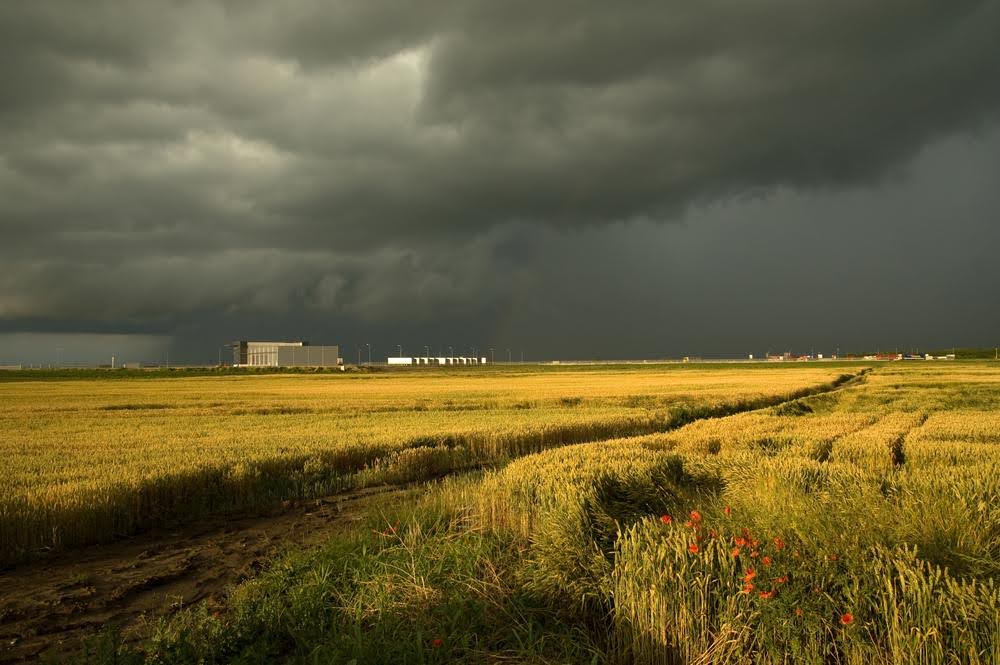
Winter Storm Fern laid bare the need for a more resilient grid and the risks that increasingly severe weather poses to people and businesses.
This historic storm delivered more than six inches of snow across 26 states from New Mexico to Maine and affected more than 230 million people across the United States. Nearly one million people lost power during the storm, and insured losses from the storm are expected to be in the range of $4 billion -$7 billion. Even weeks after the storm, some communities in Mississippi still face outages.
The electric grid’s instability is no longer just an occasional nuisance. It is a direct threat to life, property and commerce. Businesses must actively plan for these risks, which makes onsite power like Unison Energy’s combined-heat-and-power microgrids more important than ever.
Learnings From Past Winter Storms
Fern showed the grid’s vulnerabilities, but it also showed where lessons from 2021’s Winter Storm Uri were learned when 4.5 million Texans lost power. Unlike in 2021, Texas’ grid remained resilient through Fern. Despite near-record freeze-offs, the combination of weaker-than-expected power demand and higher-than-expected thermal and renewables power supply during the storm staved off power outages in the state, and across the country.
There are several major trends straining the electric grid, and businesses will likely be the first to feel these effects. The worst of the possible outages from Fern were avoided because large loads – including crypto facilities and data centers – voluntarily dropped off the grid.
Between rapidly aging infrastructure, soaring demand growth, and limited energy generation deployment, electric power interruptions are becoming increasingly common, and it is unlikely that the electric grid will hold up through the extreme weather events to come.

Aging Infrastructure Threatens Grid Reliability in Storms
Where outages occurred following Winter Storm Fern, the issue was often not power generation, but power delivery. For example, the Tennessee Valley Authority’s coal and gas generation – newly weatherized after Winter Storm Elliott in 2022 – operated without disruption, but Winter Storm Fern toppled over two dozen transmission lines that feed power to smaller utilities in Mississippi and Tennessee, while icing over other infrastructure. Similarly, over 171,000 customers of Entergy lost power when roughly 30 transmission lines, 860 poles, and 60 substations went out of service.
The smaller utilities most affected by Winter Storm Fern lack resources to strengthen their grid against storms, while larger utilities repairing their grid have run into soaring prices. According to a recent analysis by the Lawrence Berkeley National Laboratory, distribution and transmission expenditures, “often devoted to refurbishment or replacement of existing infrastructure” have been a primary driver of rising costs in the electricity sector.
As extreme weather driven by heat waves, winter storms, flooding, and other climate effects increases in both frequency and severity, utilities will continue to struggle to keep up with the necessary grid infrastructure upgrades, worsening grid reliability.
Demand Growth Stretches Existing and Future Generation Thin
Last December, BloombergNEF increased its U.S. data center power demand projections by 36%, predicting that total demand could reach 106 GW in 2035. Much of this capacity is expected to materialize on grids overseen by PJM, MISO, and ERCOT, with PJM expected to add 31 GW of data center load over the next five years.
However, one of the hardest hit grid operators by Winter Storm Fern was PJM, which reported nearly 21 gigawatts of generation outage – about 16% of the operator’s 127.4 GW demand that Sunday afternoon. Though there were no rolling blackouts, PJM did issue a pre-emergency order mandating that customers in its curtailment program limit their electricity use, and wholesale electricity prices soared across the Data Center Alley.
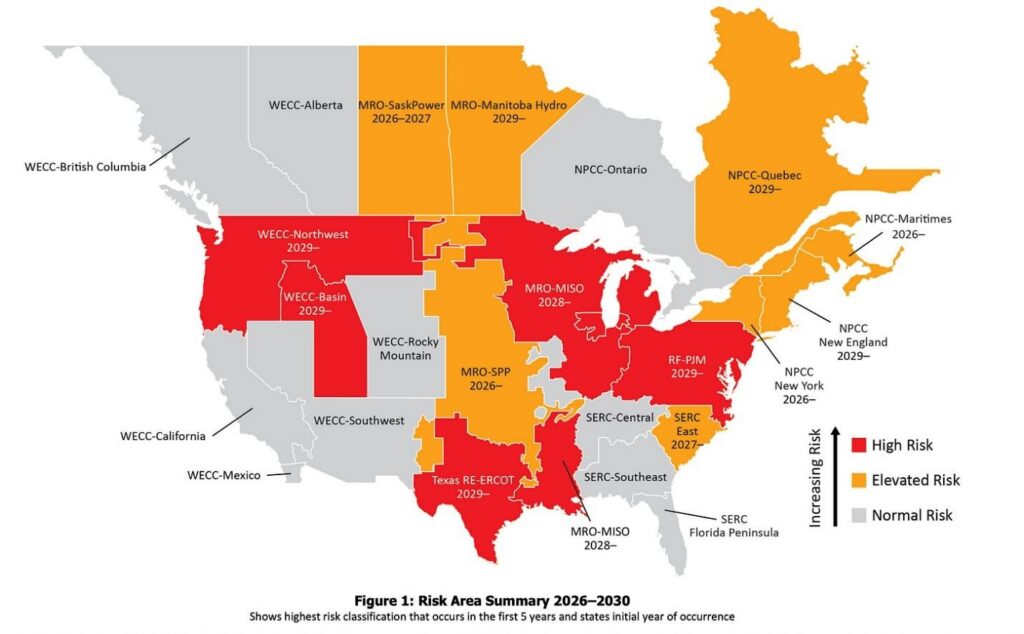
Though PJM, and the United States more broadly, met energy demands throughout this storm, rising energy demand and limited supply over the next five years elevate resource adequacy risk. According to the North American Electric Reliability Corporation, planned resources as of July 2025 would result in energy shortfalls across much of the United States, including potential data center hubs like PJM, MISO, and ERCOT.
Currently, the federal government is incentivizing data center demand while defunding and pausing over 100 gigawatts of renewables capacity additions, further threatening grid reliability long term. Though the government has also incentivized new nuclear and natural gas production, such projects take longer to come online and will likely not close the near-term gap between electricity supply and demand.
Why Businesses Need Reliable Microgrid Power
From manufacturing plants and logistics hubs to data centers and food processing facilities, modern operations depend on reliable power. Even brief volatility can be costly. Though businesses can recoup some of these losses from demand response programs, the opportunity costs of not operating at full capacity and the reputational losses – consider data centers that market uptime over 99.999%, or hospitals providing critical 24/7 care – outweigh these benefits.
Therefore, though there have been improvements to grid resiliency post-Winter Storm Uri, significant power outages during extreme weather events remain a serious risk for American businesses. Large commercial and industrial customers are increasingly being treated as grid resources during emergencies, and investments in resilience and generation remain inefficient to keep pace with surging demand from AI computing, electrified manufacturing, and electric vehicles.
At Unison Energy, we believe that combined-heat-and-power microgrids remain the best defense against these events and are critical to regular business operations.
Many facilities still rely on diesel generators as their primary resilience strategy, which are increasingly inadequate on their own due to disrupted fuel delivery, increased failure and maintenance risks from extended run times, and manual intervention requirements limiting efficacy during complex outages.
Similarly, while renewable generation and battery storage provide economic and sustainability benefits, they are limited during prolonged outages by their intermittency and finite duration.
With CHP-based microgrids – onsite power generation that can operate independently of the utility grid when necessary – when grid disturbances occur, the system can automatically isolate and transition into island mode. Onsite generation then supports normal facility operations without interruption and can reconnect seamlessly when utility power is restored.
Unlike traditional backup systems, microgrids are designed to operate continuously, delivering resilience without relying on manual response or fragile fuel logistics, while also providing value during normal operations through cost optimisation and demand management.
Power Under Pressure
Though the electric grid demonstrated greater resiliency through Winter Storm Fern compared to Winter Storm Uri, we are hardly out of the woods concerning outage risks. With aging infrastructure, soaring electric demands, bottlenecked energy generation development, and a limited supply of funding for the rapidly changing grid, power interruptions due to extreme weather will become increasingly common.
Faced with these complications, businesses prioritizing reliability stand to benefit greatly from shifting away from the electric grid and towards continuous, resilient microgrid power that can weather even the most severe storms.
Energy insights, delivered
Subscribe for more content.
Related Blogs

Unison Energy and Sonoma Valley Hospital Build Microgrid System to Make Hospital More Resilient During Natural Disasters
Major Gulf Coast Pipeline Expansions in 2025: A Strategic Opportunity for Data Centers and Industrial Energy Users
Policy Whiplash: Why Data Centers Must Take Control of Their Power Now