Rising Utility Electric Prices Are Here to Stay: What Businesses Can Do About It
Blog
Energy Cost savings
Electricity price hikes in 2025 signaled a fundamental shift in how power is produced, delivered, and priced. In 2026, utilities face a perfect storm of accelerating demand, delayed supply, and mounting infrastructure costs. This isn’t temporary volatility – it’s a structural reset that will continue escalating electricity prices. For businesses, the question is no longer whether costs will rise, but how to respond before they do.
Electricity prices rose steadily throughout 2025, and the pressures driving those increases are only intensifying. Across the United States, residential electricity costs climbed roughly 6.5% year-over-year, as utilities struggled to keep pace with inflation, infrastructure investment, and surging demand.
At the center of this shift is a fundamental mismatch: demand for power is accelerating far faster than the grid can respond. As utilities enter 2026, they face growing political and economic pressure to stabilize prices. But the reality is stark – nearly every major force shaping the power sector is pushing costs higher, not lower.
Data centers are rewriting demand forecasts
The rapid expansion of AI and cloud computing has transformed electricity demand almost overnight. Data centers alone are expected to require 22% more grid power in 2025 than the year prior, with total demand projected to nearly triple by 2030.
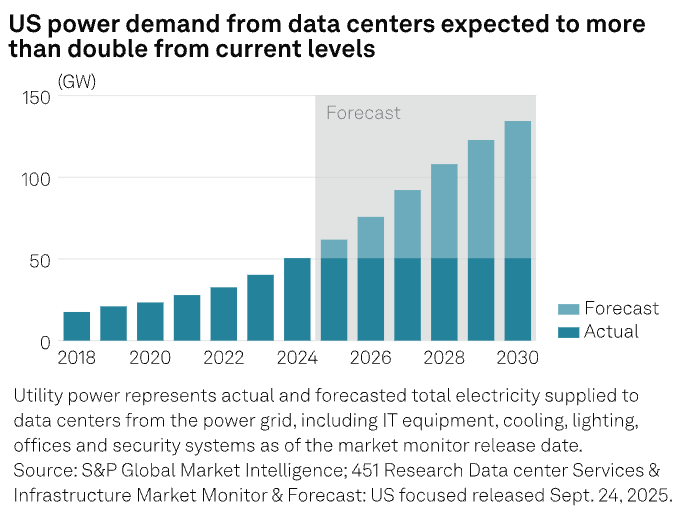
In key markets like Virginia – the global epicenter of data centers – utilities are already feeling the strain. Dominion Energy now reports annual demand growth of 5–6%, up from just 1% a few years ago. And utilities across the country are fielding interconnection requests for data centers totaling more than 700 GW – exceeding the entire U.S. power consumption in 2023.
Though most of these requests are unlikely to convert to real, operating projects, they still greatly impact utility behaviour. Such speculative and unevenly distributed projects make it difficult for utilities to plan efficiently, but the grid must nonetheless prepare for them – driving billions in preemptive infrastructure investment.
The result is a system where demand forecasts are increasingly unreliable, yet capital expenditures continue to rise – costs that ultimately flow through to ratepayers.
Delays are compounding the problem
If demand growth were the only challenge, utilities might still be able to respond. But supply-side expansion is facing significant delays, too.
Interconnection queues are backed up for years in many regions, leaving new projects – both generation and large loads – waiting to come online. At the same time, permitting bottlenecks, supply chain constraints, and policy complications are slowing development across the board.
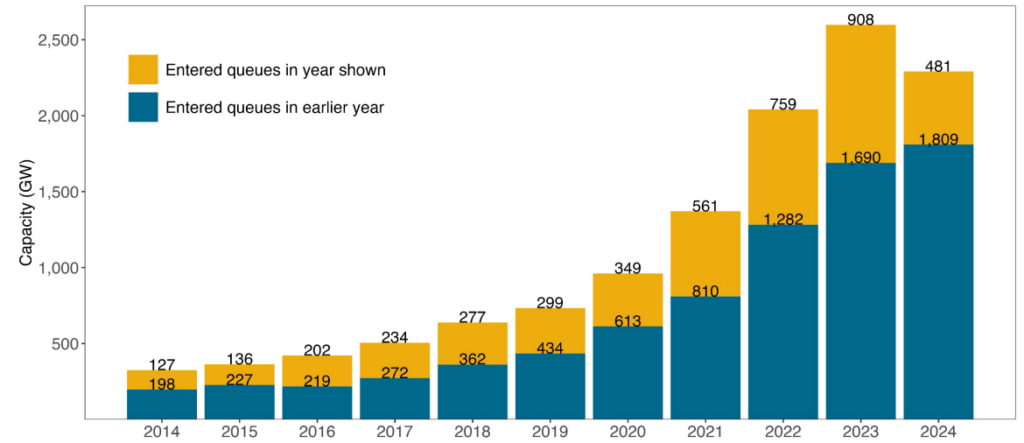
Source: Queued Up: 2025 Edition from Lawrence Berkeley National Laboratory
Long lead times and project development timelines further delay supply-side expansion: baseload power such as geothermal power takes five to ten years to plan and build, while new nuclear can take ten to fifteen years or longer. While natural gas facilities can take less time, wait times for large-scale turbines have swelled to over seven years.
Even existing power is becoming more expensive
Utilities are increasingly forced to rely on existing generation assets to maintain reliability – but that strategy comes with rising costs.
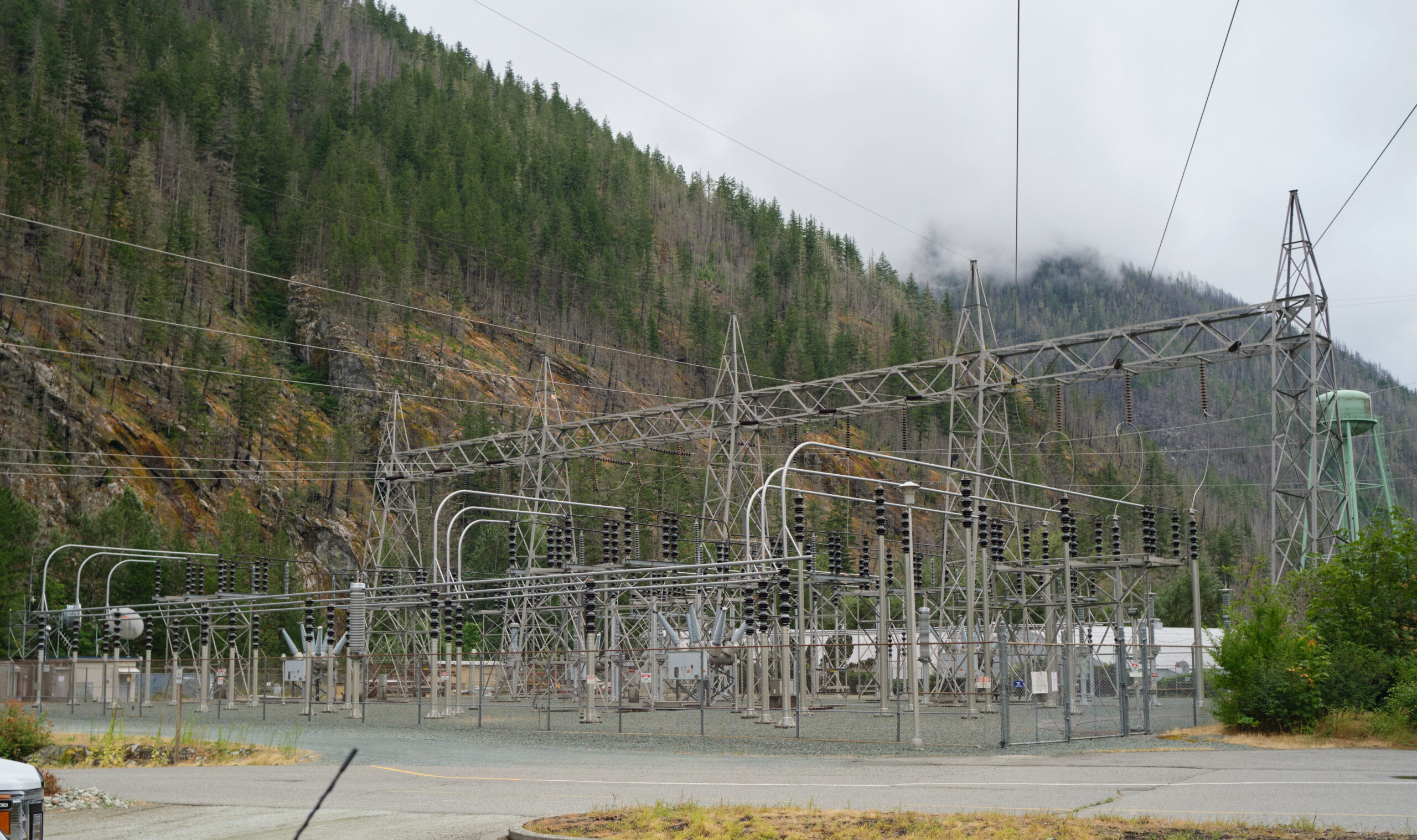
Keeping aging coal plants online has recently been hailed as a way to manage grid reliability, but they are increasingly uneconomical. At the same time, the transmission and distribution system – the backbone of the grid – is underbuilt and aging. Upgrading it requires massive capital investment: utilities are planning to spend $1.4 trillion over the next five years, with about $700 billion allocated for transmission and distribution upgrades. Typically, those costs are passed directly to customers.
While solutions like energy efficiency, demand response, and distributed energy resources (DERs) can help at the margins to better deploy our existing power, they are not scaling quickly enough to offset the need for large, system-wide upgrades. Utilities are effectively caught in a bind: invest heavily and raise rates, or risk reliability issues.The bottom line: utilities are unlikely to hold the line on prices.
Taken together, these dynamics point to a clear conclusion: utilities will struggle to prevent further electricity price increases in 2026 and beyond.
Demand is accelerating. Supply is delayed. Infrastructure is aging. And the cost of maintaining reliability is rising across every layer of the system.
For businesses, this creates a new reality – one where energy costs are not only higher, but also more volatile and less predictable.
A different path forward
Rather than relying solely on an increasingly strained grid, forward-looking organizations are taking a more proactive approach to energy.
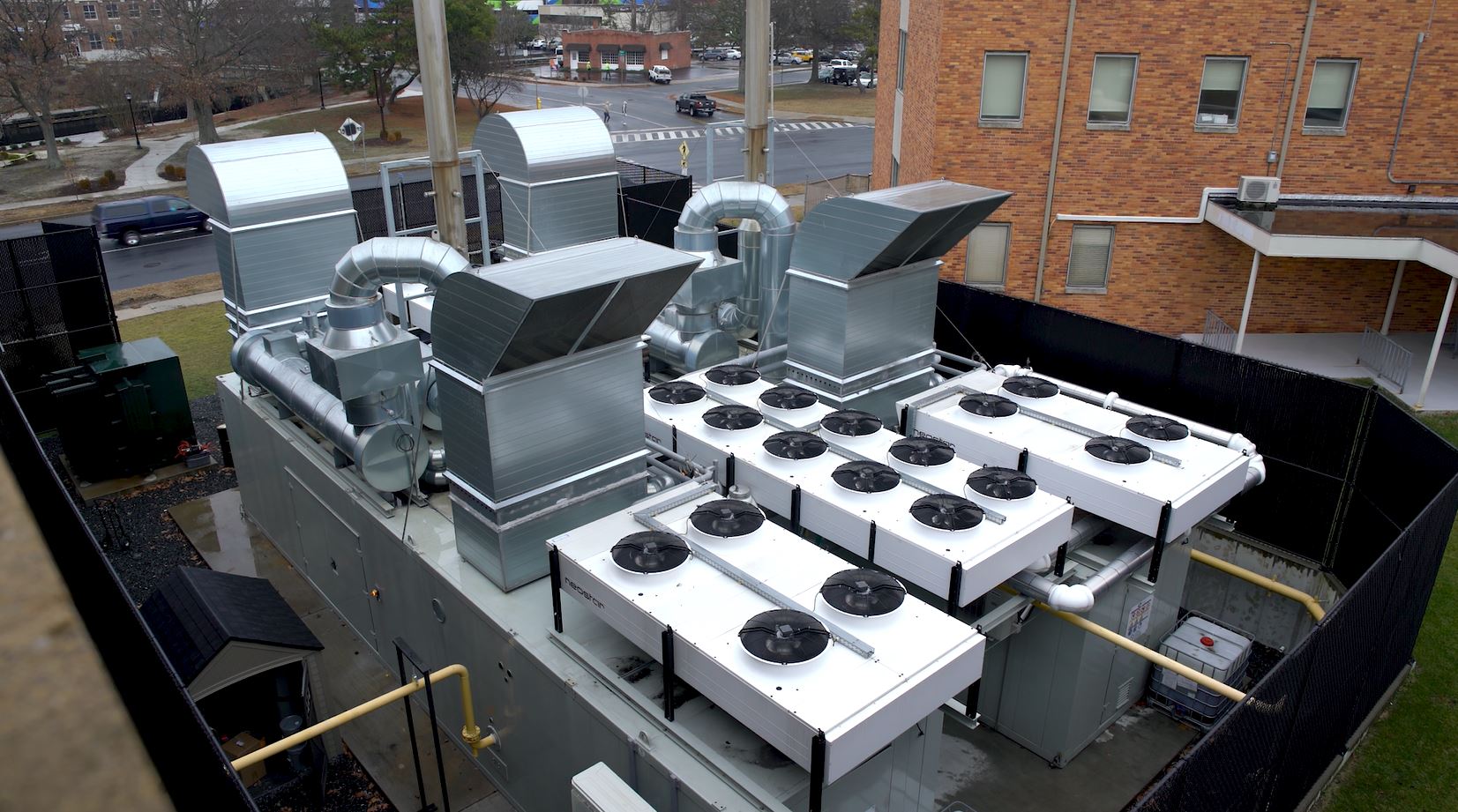
Microgrids – localized energy systems that can operate independently or alongside the grid – offer a way to regain control. By integrating on-site generation, storage, and intelligent controls, businesses can reduce exposure to utility rate increases, avoid interconnection delays, and improve resilience.
At Unison Energy, we work with commercial and industrial customers to design and deploy tailored microgrid solutions that provide a significant portion of their energy needs, often at a lower and more predictable cost than traditional utility service. As the structural pressures on the grid continue to mount, the question is no longer whether electricity prices will rise – it’s how prepared your business is to respond.
Now is the time to take control of your energy strategy.

ByUnison Energy
Share on
Share on
About us
Engineered for Performance. Built for the Long Term.
Unison Energy combines capital strength, technical expertise, and operational discipline to deliver resilient power for facilities across industries.
Related posts
Insights shaped by over a decade of experience
Explore more perspectives on energy costs, resilience, and on-site generation from the Unison Energy team.
View All Blogs